GRF Charity Blog Implementation
Manchester-based humanitarian aid charity GRF had a new website with no blog, despite them regularly implementing projects. I identified an opportunity and implemented a charity blog, sharing regular news & updates.
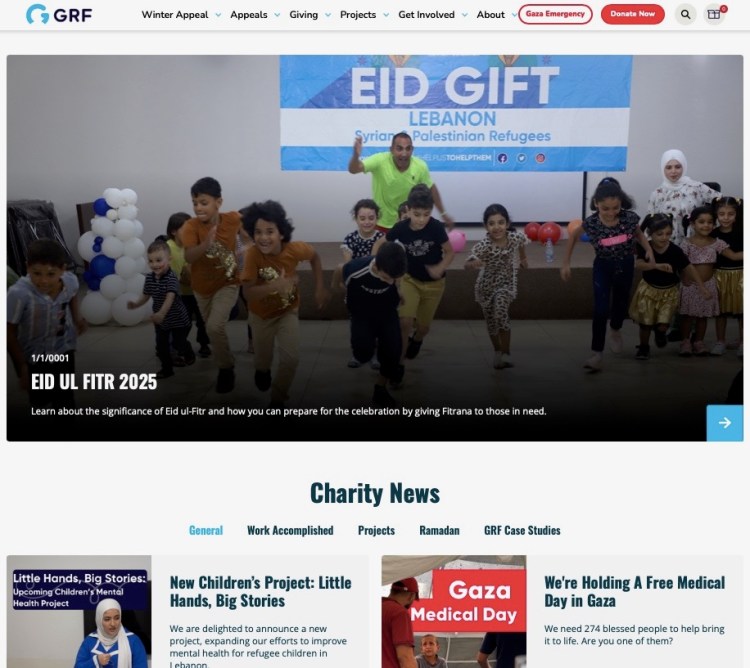
Objective 1: Attract more visitors to the website
Approach: I conducted keyword research and identified core campaign/project pages to support. I then created SEO-focused blog posts, each following SEO best practices and internally linking to core pages, thus strengthening them.
Results: Several posts achieved position 1 on Google, increasing traffic to the website.
Objective 2: Communicate the charity’s work
Approach: I liaised with internal teams to discuss which existing resources were already available. I found several resources that had not been shared with donors, with more regularly incoming. I collated these resources and published monthly updates, highlighting the work implemented each month. Maximising the impact of these resources, I further shared case studies and highlighted notable projects, campaigns and challenges, amplifying the charity’s work.
Results: The blog became a hub for GRF news & updates, increasing transparency for donors & building trust. Blog posts became valuable assets that were repurposed into email newsletters and social media posts. Assets were also shared with internal teams, allowing them to stay up-to-date with projects implemented and use these assets within their work. For example, the fundraising team could direct donors to the blog so they could find out more about the charity.
Blog Posts
Blog posts written for GRF, Manchester-based humanitarian aid charity. I produced a range of SEO-focused blog posts and charity/project updates, each designed to drive traffic to the site or build trust with donors.
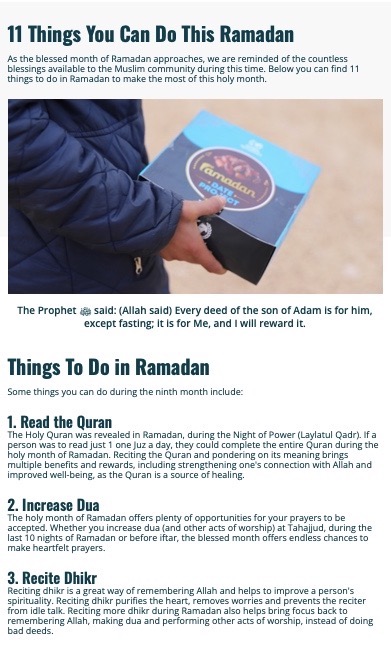
Achieved position 1 on Google, driving traffic to the site
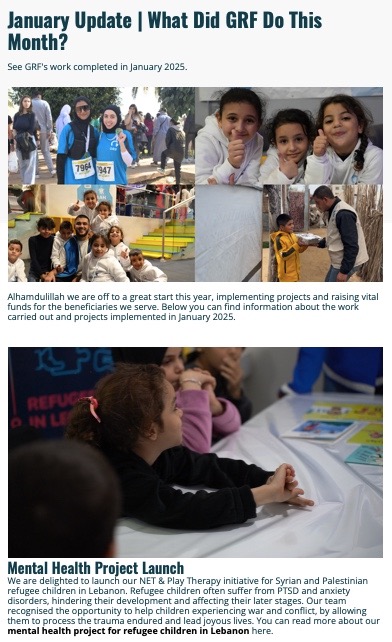
Increased transparency, thus building trust with donors
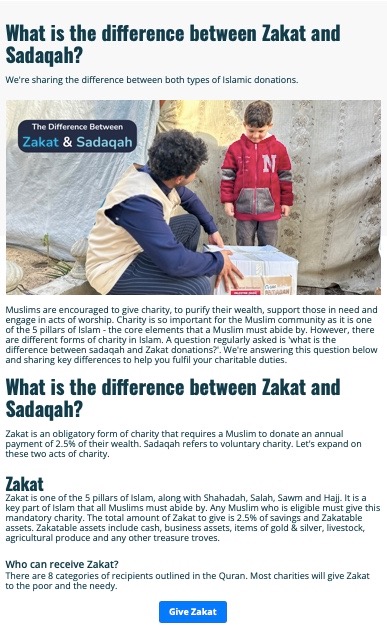
Included in Google’s AI Overview, driving traffic to the site
Campaign Booklets
Project portfolio and campaign booklets written for GRF. Many booklets were showcased at DIHAD 2025 (Dubai International Humanitarian Aid Conference), one of the biggest humanitarian aid conferences in the world. An eBook written for Digital ID, the UK’s leading provider of ID cards, to encourage clients to switch to Mobile Access Control.

Showcased at DIHAD 2025 (Dubai International Humanitarian Aid Conference)
“In conflict and poverty-affected areas, healthcare is often difficult to access, causing treatable diseases like malaria to become life-threatening – and often fatal. Vulnerable communities urgently need access to healthcare facilities, as many suffer from conditions worsened by war, displacement and poverty. By improving healthcare services, we can enhance public health and help communities thrive.”

Showcased at DIHAD 2025 (Dubai International Humanitarian Aid Conference)
“25 million people in Sudan require aid. The country is experiencing an urgent humanitarian crisis as a result of the conflict. Violence has caused severe damage and destruction throughout Sudan, leaving millions of people unable to access medical care, food, water and other vital resources. There is mass displacement, with both an increased number of internally displaced people (IDPs) and Sudanese refugees fleeing to neighbouring countries such as Chad. The already struggling economy has collapsed, pushing more families into poverty and extreme hunger.”

Showcased at DIHAD 2025 (Dubai International Humanitarian Aid Conference)
“Jordan is host to over 1 million Syrian & Palestinian refugees. The country is home to Jerash Camp, nicknamed the ‘Gaza Camp’, which houses 30,000 Palestinian refugees. Many refugees live in densely packed homes with little access to food, electricity and other services. Most are unable to generate an income, leaving them reliant on humanitarian aid. Our team have provided aid to Syrian and Palestinian refugees in Jerash Camp and Amman, helping to improve their quality of life.”

Showcased at DIHAD 2025 (Dubai International Humanitarian Aid Conference)
“In Pakistan, the population remains at risk of annual flooding, food insecurity and a lack of reliable income. Floods severely impact the region, damaging infrastructure and affecting agriculture, which many in Pakistan rely on for food and livelihoods. Flooding further worsens water contamination, leading to the spread of waterborne diseases and causing a critical need for humanitarian aid and WASH (water, sanitation and hygiene) initiatives.”

“This winter will be different for many across the globe. Newly displaced people will be living in tents – their only form of shelter – with snow and harsh winds constantly threatening to cause damage. Many refugees will be living in overcrowded, enclosed camps, forced to worry about the bitter cold among every other challenge they face. Innocent children won’t be able to feel the warmth of their favourite blankets or cuddly toys they left behind at home. With millions displaced this year, millions of winters will be unfamiliar.”

Presented to prospective clients
 HAYCH WRITES